Jackson Earth Restoration Project
Home
About
Our Mission
volunteer
Our Board
Shop
List
News and Updates
Legacy Tree Donations
Transplant Process
Sponsor Us
Jackson Earth Restoration Project
Home
About
Our Mission
volunteer
Our Board
Shop
List
News and Updates
Legacy Tree Donations
Transplant Process
Sponsor Us
More
  • Home
  • About
  • Our Mission
  • volunteer
  • Our Board
  • Shop
  • List
  • News and Updates
  • Legacy Tree Donations
  • Transplant Process
  • Sponsor Us
  • Sign In
  • Create Account

  • Orders
  • My Account
  • Signed in as:

  • filler@godaddy.com


  • Orders
  • My Account
  • Sign out

Signed in as:

filler@godaddy.com
  • Home
  • About
  • Our Mission
  • volunteer
  • Our Board
  • Shop
  • List
  • News and Updates
  • Legacy Tree Donations
  • Transplant Process
  • Sponsor Us

Account

  • Orders
  • My Account
  • Sign out

  • Sign In
  • Orders
  • My Account

Our Conservation and Outreach Programs

Habitat conservation and restoration

Habitat conservation and restoration

Habitat conservation and restoration

  • Rehabilitate                   Degraded areas and erosion zones into native habitat zones (e.g., pollinator meadows, riparian buffers). 


  • Keystone species protection: Badgers, foxes, and desert tortoises


  • Pollinator gardens bloom for healing and remembrance, using native species selected through ecological surveys.


  • Tree groves rise in spiral p

  • Rehabilitate                   Degraded areas and erosion zones into native habitat zones (e.g., pollinator meadows, riparian buffers). 


  • Keystone species protection: Badgers, foxes, and desert tortoises


  • Pollinator gardens bloom for healing and remembrance, using native species selected through ecological surveys.


  • Tree groves rise in spiral patterns, honoring ancestral wisdom and supported by studies of the soil microbiome

.

  • Ceremonial zones hold sage, cedar, and sweetgrass, as well as trees dedicated to children lost to violence and cancer.


  • Meditation paths soften the desert’s edge with moonflowers and moss, chosen for their low water needs and cooling effects.

Species Monitoring & Protection

Habitat conservation and restoration

Habitat conservation and restoration

  • Tracking populations of indicator species (e.g., owls, foxes, native bees). 


  • Wildlife cameras and acoustic sensors


  • No Hunt Zones and wildlife sanctuary


  • Early warning fire detection


  • Removal of invasive species


  •  Natural Resources Conservation Service, a federal agency under the USDA that helps landowners 


  • Adjacent to 640 acres of BLM property for wildlife friendly corridors 

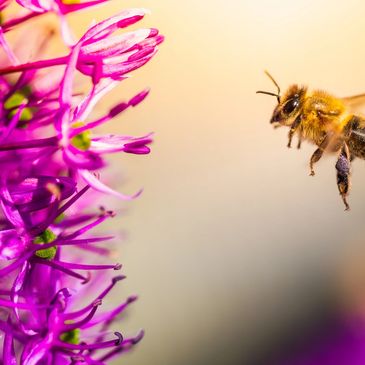
A bee flies near vibrant purple flowers in bright sunlight.  Climate action helps our environment.

Pollinators

Habitat conservation and restoration

Pollinators

  • Planting of native flowering species to support bees, butterflies, and hummingbirds.


  • “Gardens of Remembrance” for children lost to cancer or violence.


  • Hives and Honey

Legacy Tree Planting, Land Restoration & Climate Resilience

 Jackson Earth Restoration and Research Center

“Where Forests Rise for the Fallen, and Climate Finds Shelter”


In the high desert of Arizona, where the land is dry but not silent, a forest is rising, not from abundance, but from grief, intention, and knowledge. This is Jackson Earth Restoration and Research Center, a sanctuary where every tree is planted to honor a loved one who has passed, and every grove whispers the names of those lost to gun violence, and avoidable tragedy due to the lack of concern over the climate crisis.

Here, restoration is not just emotional, it’s ecological, symbolic, and scientific. Travis Dean, its steward, walks the evolving land with rigor. He doesn’t just plant trees; he designs ecosystems. Every grove is a response to climate collapse, and every root is placed with care, guided by research and engineering that respects the land’s integrity.


Jackson Earth Restoration and Research Center has become more than a place. It becomes a prototype:


  • For how to reforest the desert without disrupting its soul.
  • For how to use science as a servant of healing, not a master of control.
  • For how to meet climate change not with despair, but with design and genuine effort.


Because humanity has a choice. We can make excuses, or we can make a difference. We cannot control the actions of others, but we hold an abundance of control over our own. And here, on this land, we choose to act. 


We choose to restore. We choose to work for the good of humanity and future generations.

And someday, when the canopy is thick and the stars rise over the Kiva, someone will walk those paths and feel the temperature drop, the air moisten, and the story deepen. They won’t just see trees. They’ll see lives remembered, futures protected, and a forest that refuses to forget.


You can now plant a legacy tree in honor of someone you love.
Whether it’s a cherished pet, a beloved friend, or a family member whose memory still stirs your heart, this is a way to let their story live on. Every life that touched ours deserves recognition, and every tree planted becomes a living tribute to love, loss, and the hope that follows.  Learn More


Why is this project so important?


In a word: humanity.


Not the kind etched in "policy" or polished into slogans, but the kind that trembles beneath the floodwaters, clings to rooftops, and vanishes in the silence after the storm, to be buried by those lucky enough to survive. 


For over two decades, I stood at the fault line between science and catastrophe, building hurricane models and working with LEO satellites that whispered truths most refused to hear. With each ground zero event, the whispers grew louder.


Then came the assessment, the one that changed everything. I traced data back to the 1800s, expecting noise. What I found was a pattern and a reckoning. The numbers didn’t just speak, they mourned. They named the species already gone. They mapped the habitats collapsing in real time. They forecast not just destruction but the disappearance of our essence. 


The data not only revealed the frequent catastrophes we track but also the fragile lives we fail to protect because of our complacency.  In that moment, something inside me fractured. The data didn’t just inform me; it broke me.


From that break, a new resolve emerged: not to predict the next ground-zero event, but to restore what remains. To fight for the fragile and suffering of many species. Welcome to my resistance.


This is not the time for debate.


Species are vanishing, some forever. Those who debate will try to lure you into their doubt and lack of understanding. Lip service and performance won’t rebuild coral reefs or bring back the last migratory songbird.


Rather than debate, we need hands in the soil, boots on the ground, and minds committed to restoration. Every moment spent debating denial is a moment stolen from genuine action and another species gone. 


Working together for the greater good of the world.

Workshops and projects in the following areas will soon be offered:
 

  • Syntropic Agroforestry
  • Permaculture
  • Hydroponics 
  • Wetland restoration 
  • Beaver Dam Analogs Construction (BDA)
  • Native wildlife
  • Native American studies 

​

Our 160 acres is a small test bed, but it has given us the space to stretch out and experiment. It will eventually include a campus-style series of workshops that will include technology workshops to focus on the problem.  Using new technology to solve urgent yet old issues.  We will soon offer:
 

  • 3D Printing Design 
  • Additive Manufacturing
  • Robotics
  • Software Development
  • Engineering Retreat and contests
  • Climate Summits
  • Wind, Solar, and Geothermal Workshops

​

We will still have enough space to provide the following: 

​

  • Wellness and clean eating summits
  • Bike and hiking trails
  • Desert Yoga
  • And an Astronomy Event Calendar

​

The 160-acre campus/ranch will allow many people to come together to discuss ways of making a big change. It will also provide a kind of living lab environment for people to put their thoughts into action. Visitors and volunteers will plant, learn, harvest, and design new systems technologies to help with this monumental task.

​

The project has started an Amazon Wish List, and we hope to have 1 million seed varieties to use during the first group visit.

Learn more
Indoor vertical farm with LED-lit shelves growing leafy greens.  Jackson Earth restoration in progress.

Watch the campus evolve

Too often, the talent and skills of others are overlooked. So many worthy people on the planet lack the one thing for which those trending have – opportunity.


Opportunities can take many forms. Sharing your experience online with others as you monitor the progress of projects is an excellent way of helping us figure out solutions to problems. Some may collaborate with us directly and briefly stay as volunteers and act as head engineers, botanists, or biologists. Others may contribute items like seeds or heavy equipment. The most important contribution of all is knowledge.   


Those who understand the difference between weather and climate know how much work we must do. Each of us realizes that the environment is hemorrhaging, but we must work hard to nurture our home until a more significant change is made in how the modern world uses resources. While we cannot solve all the problems created by the careless, we can do our part by proving that we can make a difference with effort, fresh ideas, educating others, and planning.


Those interested in this project must know that we might not live long enough to see the forests we create, but we will live long enough to see the beginnings of the oasis, and we can all take pride in our contributions.  We can say, “I was there” or “That was my idea,” and we will passively make history for the coming generations.  We are all just links in the time chain; we should use each approach to solve this problem together for a stronger future.  


Today, the soil is washed away quickly during the Monsoon season. This is due to a lack of biomass.  Help us regenerate the soil, add biomass & diversity, and bring the ecosystems back to the balance that once existed. After all, It can take 500 to 1000 years to build up one inch of top soil so we need all the help we can get.  


Please help.  Thank you for visiting the site. 

​


Copyright © 2026 Jackson Earth Restoration and Research Center, a Non-Profit Organization - All Rights Reserved.

  • volunteer
  • Privacy Policy
  • Terms and Conditions
  • Process

It is as real as it gets.

This website uses cookies.

We use cookies to analyze website traffic and optimize your website experience. By accepting our use of cookies, your data will be aggregated with all other user data.

Accept

Forest Hero

Donate equipment, time, or buy merchandise. 

Learn more